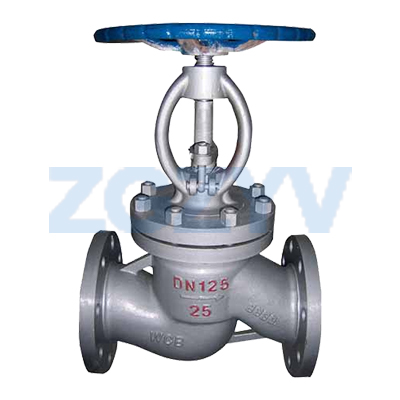
Refer to these methods to prevent jamming of cast steel globe valves!
If the cast steel globe valve gets stuck and cannot rotate, it will directly affect normal use. Therefore, regular maintenance, standardized operation, and environmental protection can be used to avoid getting stuck! Below are separate explanations.
1. Operating standards (eliminate the root cause of valve jamming)
Valve opening and closing techniques:
Valve opening limit position: After the valve is fully opened, it must rotate half a turn/1 turn to release the stress on the valve stem and avoid being stuck.
Slow operation: Rotate the handle evenly and avoid violent twisting (to prevent valve stem deformation).
Prohibit incorrect operations:
Do not use a wrench to extend the lever arm and forcefully twist it (which may cause the valve stem to break).
The closed state should not withstand high pressure differentials for a long time (accelerating sealing surface adhesion).
2. Active protection (critical maintenance item)
Valve stem lubrication: Apply high-temperature silicon-based grease or graphite powder once every quarter.
Rust prevention activity: Rotate fully open/close at least 3 times a month.
Sealing surface cleaning: Disassemble and remove welding slag and particulate matter annually.
3. Environmental adaptation (for high-risk scenarios)
Wet/coastal areas: Install corrugated pipe protective covers on valve stems to isolate salt spray; Check the valve body for chloride ion corrosion every week (with a focus on the flange neck).
Low temperature working conditions (below -20 ℃): Low temperature cast steel material is selected; Maintain the temperature of the valve chamber above 0 ℃ (anti icing and anti cracking) with tropical insulation.
4. Emergency handling (in case of slight jamming)
If the resistance to handle rotation increases:
Knocking method: lightly tap the side of the valve body with a hammer to shake off rust residue (avoid directly tapping the valve stem);
Penetration method: Spray WD-40 special rust inhibitor and let it stand for 10 minutes for penetration;
Thermal expansion method: Heat the valve body with a hair dryer to 60 ℃ (no open flames!), and use metal expansion gaps.