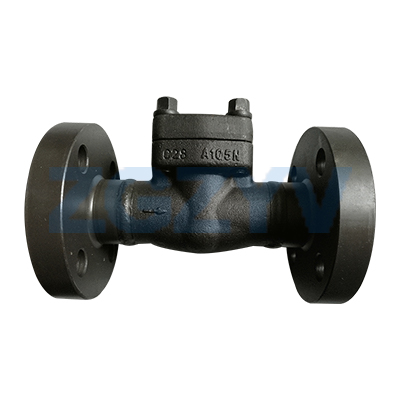
What is the reason for the sagging of forged steel valve core?
The sagging of the valve core in forged steel valves is mainly caused by long-term mechanical wear, impact deformation, and corrosion.
When the connection between the valve core and the valve stem gradually wears out due to high-frequency switch action, the clearance between the two increases, causing the valve core to sag due to gravity and unable to accurately align with the valve seat, resulting in internal leakage. If the valve is subjected to medium impact or excessive torque operation when it is closed, the bending of the valve stem will pull the valve core away from the axis and aggravate the sagging.
In addition, corrosive media (such as acid and chloride ions) corrode the joint between the valve core and valve stem, causing electrochemical corrosion to weaken the connection strength, and the accumulation of corrosion products further enlarges the gap.
Internal structural defects can accelerate this process: eccentric wear of the guide sleeve leads to valve stem deflection (guide failure when the design clearance exceeds 0.1mm), causing valve core oscillation and fatigue fracture of the connecting pin. Maintenance assembly errors (such as excessive gasket thickness or valve core size deviation) can also change the stress structure. If the cold state is too tight and the thermal expansion gets stuck, it may strain the threads and cause structural sagging.
Prevention should be controlled from multiple dimensions:
Regular maintenance → Check the verticality of the valve stem every quarter (offset ≤ 0.05mm), and replace the wear and tear gasket in a timely manner.
Operating standards → Over torque switch is strictly prohibited, and thermal expansion allowance should be reserved for high-temperature systems.
Structural upgrade – Adopting a valve core valve stem integrated forging design or a dual phase steel valve stem lined with corrosion-resistant alloy in corrosive environments.
Urgent handling requires disassembling the valve, synchronously grinding the sealing surface of the valve core, and correcting the bent valve stem.
If there is still internal leakage or abnormal noise after adjustment, it is necessary to check whether the valve seat has cracks due to the impact of the valve core.