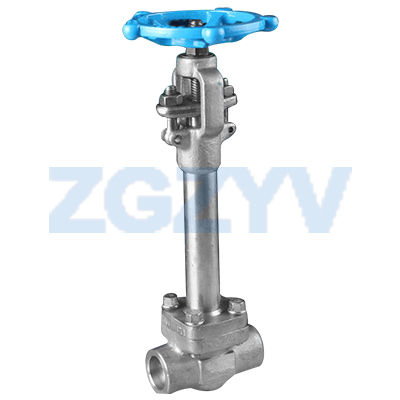
What methods can be used to adjust the inflexible lifting of forged steel gate valves?
The inflexibility of the lifting of forged steel gate valves can be investigated and dealt with from three directions: valve stem, packing, and transmission system.
Firstly, the fit between the valve stem and the valve cover nut should be checked. If the thread is found to be stuck or corroded, it should be soaked in kerosene and treated with a loosening agent. If it is severely corroded, a 4% nitric acid solution should be used to detect cracks, and if necessary, a corrosion-resistant valve stem component should be replaced. For the jamming caused by tight closure in cold state, the active gap can be restored by heating the valve body to 80-100 ℃ and slowly cooling it down.
Secondly, it is necessary to verify the compression state of the packing box. Overly tight packing will significantly increase the resistance of the valve stem movement. At this time, the cover bolts should be evenly loosened until the valve stem can rotate freely. If the packing fails due to aging, it is recommended to replace it with graphite braided packing and adopt a layered pressing process. For each layer pressed, the valve stem needs to be manually rotated to ensure that the packing is evenly stressed. For electric gate valves, it is necessary to check the over torque protection device of the actuator to prevent valve stem bending caused by motor stalling.
During long-term maintenance, it is necessary to establish a regular lubrication mechanism, apply molybdenum disulfide grease to the valve stem threads every quarter, and check the lubrication status of the bearing box. During operation, the principle of “fully closed and then rotated 1/4 turn” should be followed to avoid blockage of the sealing surface due to thermal expansion and contraction. If the valve stem is found to be bent beyond the straightness tolerance of 0.5mm/m, a new stem must be replaced immediately and the verticality corrected
Special attention should be paid during the processing: when heating, precision components such as solenoid valves should be avoided, as temperatures exceeding 200 ℃ may cause seal failure. For high-pressure gate valves, a sealing test at 1.1 times the working pressure must be conducted after any adjustment.
If there is still periodic jamming after adjustment, it is necessary to focus on checking whether the valve plate guide groove is worn or deformed. Such deep defects usually require replacing the gate assembly to solve.