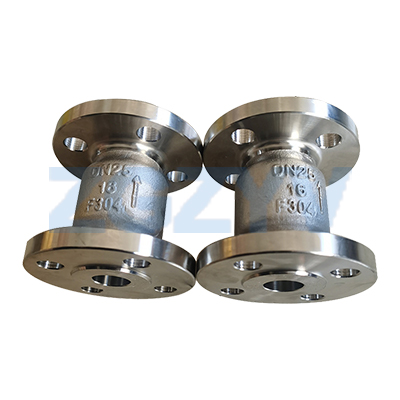
Solution for Damaged Valve Disc of Forged Steel Check Valve
The damage of forged steel check valve disc is usually caused by multiple factors working together.
Material fatigue is the main problem after long-term use, as the valve disc gradually develops microscopic cracks during frequent opening and closing actions, ultimately leading to fracture or deformation.
Fluid flushing is also an important factor, especially when the medium contains solid particles, which accelerates the wear of the valve disc surface.
Corrosion issues are particularly prominent in chemical systems, where chemical or electrochemical corrosion occurs when the medium does not match the valve disc material.
The issue of sealing surface cannot be ignored, as uneven sealing surface, impurities, or aging sealing material can all affect the normal operation of the valve disc.
In addition, spring failure can indirectly cause damage to the valve disc. Insufficient or broken spring elasticity can prevent the valve disc from resetting in a timely manner, resulting in abnormal impact.
The repair plan varies depending on the degree of damage.
For valve discs with slight wear, professional grinding tools can be used to repair the sealing surface. Use grinding paste to gradually polish the surface until it is flat and smooth, restoring the sealing performance. This method has low cost but high technical requirements, which require ensuring that the surface roughness after grinding reaches Ra0.4 μ m or less. When the valve disc shows cracks or severe deformation, it must be replaced. Before replacement, the check valve must be completely disassembled from the pipeline system, including safety steps such as closing upstream and downstream valves, emptying the medium, and releasing residual pressure. After disassembly, carefully check the condition of the valve seat. If the valve seat is also damaged, it needs to be repaired or replaced synchronously. Otherwise, the new valve disc will still be quickly damaged due to poor fit.
Preventive maintenance can significantly extend the service life of valve discs.
Correct installation is the foundation, and it is necessary to ensure that the valve flow direction is consistent with the medium flow direction. Lift check valves should be installed vertically. Regular inspections are equally important. It is recommended to check the flexibility of valve disc movement and sealing surface condition every quarter, and conduct a comprehensive disassembly inspection every year. In terms of medium treatment, a filter should be installed in front of the valve to prevent solid particles from entering; For corrosive media, valve discs made of corrosion-resistant alloy materials should be selected. Optimization of operations also has an effect, avoiding severe fluctuations in system pressure and reducing the impact load on valve discs. In addition, environmental control is important for valves installed outdoors, and rain and dust prevention measures should be taken to prevent the external environment from accelerating the aging of the valve disc.
Through the above systematic measures, not only can the existing valve disc damage problem be effectively solved, but similar faults can also be prevented from happening again, ensuring the long-term stable operation of forged steel check valves.