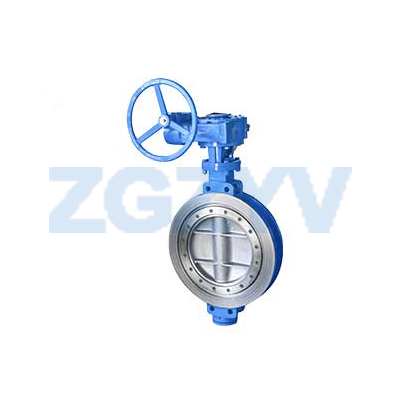
Why is the butterfly valve moving slowly?
The slow movement of butterfly valves is a common operating fault, and the root cause mainly involves multiple aspects such as mechanical transmission, lubrication status, and execution system.
Firstly, let’s talk about the mechanical transmission system issue. After long-term use, the transmission components will wear out, resulting in a decrease in power transmission efficiency, manifested as a significant reduction in valve opening and closing speed. Bending and deformation of the valve stem can increase rotational resistance, while damage to the bearing can cause the valve stem to rotate inflexibly. Both of these situations can directly cause the valve to move slowly, and in severe cases, it may become completely stuck. Abnormal friction occurs between the butterfly plate and the valve seat due to wear of the sealing surface or accumulation of impurities, and the internal resistance of the transmission mechanism increases due to lack of lubrication, which significantly affects the smoothness of valve operation.
Another issue is the failure of the lubrication system, where the transmission components and bearing parts have not been lubricated for a long time, leading to an increase in dry friction resistance. This is one of the most common reasons for delayed movement, especially in high temperature or high humidity environments. The original lubricant loses its lubricating effect due to oxidation, hardening, or impurities mixed in after long-term use. This situation is particularly common in food grade applications, where specific food grade lubricants need to be used.
Finally, system failures such as aging of electric actuator motors or improper torque settings, as well as unstable air source pressure in pneumatic actuators, can all lead to insufficient driving force, resulting in slow valve action. Signal transmission delay, interference, or loss in automation control systems can slow down valve response. This situation is more common in modern butterfly valves that use intelligent control.
In addition, when dealing with viscous or easily crystallizable media, residual media will gradually increase the resistance to valve movement. The transmission of pipeline stress causes the valve stem to bear additional loads, or the installation angle does not meet the requirements, which will increase the resistance of valve action. At low temperatures, the viscosity of lubricants increases; In high temperature environments, sealing materials may expand, which can affect the operational performance of valves.