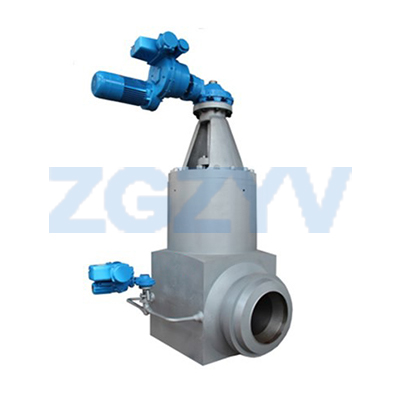
Method for repairing stuck valves in power stations
The repair of power station valve jamming should prioritize safety, first completing system isolation and risk control, then gradually investigating the cause and implementing precise repairs to avoid blind operation causing secondary failures.
Firstly, it is necessary to completely cut off the source of the medium upstream and downstream of the valve, close the corresponding isolation valve or main pipe valve, and ensure that the stuck valve is in a state of no medium flow. Then, open the vent valve and drain valve on the valve body or pipeline to release the residual pressure in the pipeline. After the pressure gauge shows zero pressure, for pipelines with high temperature, toxic or corrosive medium, residual medium needs to be removed through replacement, blowing and other methods. At the same time, on-site safety protection should be done, warning signs should be set up, and emergency tools should be equipped.
After completing the safety isolation, a preliminary fault diagnosis is made by observing whether there are signs of medium leakage on the appearance of the valve, manually rotating the valve stem to feel the resistance position (such as full or partial blockage of the valve stem), and checking the valve operation records (such as whether there have been recent cases of excessive medium impurities, abnormal opening and closing frequency, etc.), to preliminarily distinguish whether the cause of blockage is due to medium impurities jamming, excessive friction between the valve stem and packing, scaling or deformation of the valve core and seat, or drive mechanism failure (such as electric actuator gear jamming, insufficient pneumatic actuator air source pressure).
If it is initially judged to be an external drive mechanism problem, disconnect the actuator from the valve and manually try to rotate the valve stem. If the valve stem can rotate normally, focus on repairing the actuator, such as checking whether the motor and reduction gearbox of the electric actuator have worn or stuck parts, replacing damaged parts, and recalibrating the stroke; If it is a pneumatic actuator, check whether the air supply pipeline is blocked and whether the cylinder is leaking. After repair, reconnect and test the linkage effect.
If the valve stem is still stuck when manually rotated, the valve body needs to be disassembled. First, remove the packing cover, take out the aged or deteriorated packing, and check whether there are scratches, rust or deformation on the surface of the valve stem. If there is slight damage, polish it with fine sandpaper. If it is serious, replace the valve stem with the same specification; Subsequently, disassemble the valve cover, remove the valve core, and check whether there is scaling, wear, or foreign object blockage on the sealing surface between the valve core and the valve seat. Use specialized tools to remove impurities such as scale and rust. Minor wear on the sealing surface can be repaired by grinding, and in severe cases, the valve core or valve seat components need to be replaced.
After repairing or replacing all components, assemble the valve in the reverse order of disassembly. Note that the packing should be filled in layers and evenly compressed to avoid medium leakage or increased valve stem friction due to loose packing. The valve cover bolts should be symmetrically and evenly tightened to prevent deformation of the valve body caused by uneven stress. After assembly, first perform a manual switch test to ensure that the valve stem rotates flexibly and without jamming. Then slowly open the upstream isolation valve, gradually increase the pressure to the working pressure, check whether there is any leakage at each sealing point of the valve, and test whether the start stop and limit of the electric or pneumatic actuator are accurate. After confirming that there are no problems, the valve can resume normal operation.