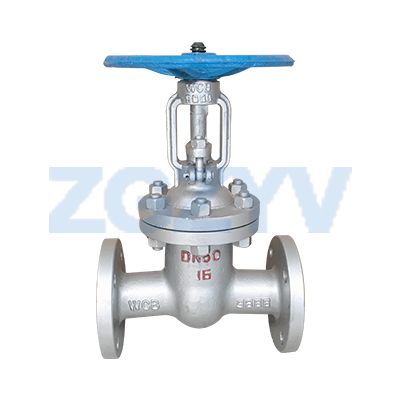
What are the shortcomings of stainless steel gate valves?
The current shortcomings of stainless steel gate valves are mainly reflected in the performance limitations under high temperature and high pressure conditions, design defects in flow channels, and the complexity of operation and maintenance. Its metal hard sealing structure is prone to wedging of the sealing surface due to thermal expansion in high temperature environments, and forced opening and closing may cause wear of the sealing surface or breakage of the valve stem. In high-pressure scenarios, the opening and closing torque significantly increases, requiring the use of high-power electric actuators, which not only increases equipment costs but may also cause damage to the sealing surface due to improper operation.
The inherent problem of flow channel design cannot be ignored: the chamber between the gate and the valve body is prone to gas accumulation, leading to gas blockage, affecting flow stability and possibly causing corrosion, especially in hygiene fields such as food and medicine, where the risk of medium residue is higher. In addition, the manual operation of traditional wedge gate valves lacks precise position indication, and relying on experience to adjust can easily lead to over tightening or over loosening, exacerbating sealing surface loss.
At the maintenance level, the hard sealing structure of stainless steel gate valves requires strict installation accuracy. Pipeline stress may cause valve body deformation and compression of valve core activity space. Casting process defects (such as sand holes and air holes) of large-diameter valves may cause shell leakage. After long-term use, the aging of seals (such as PTFE wear and graphite packing failure) requires frequent replacement, further increasing maintenance costs. Despite its excellent corrosion resistance, the sealing surface still faces the risk of wear in environments containing particulate media or high flow rate erosion, and requires regular repair with hard alloy welding.