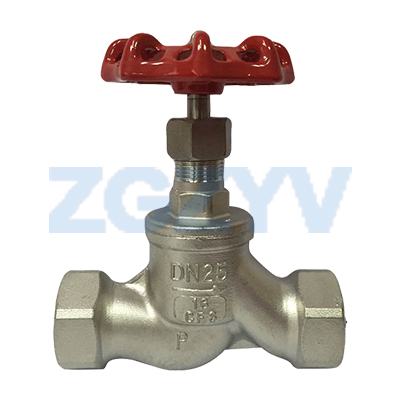
How to manage lubrication for forged steel gate valves?
Lubrication of forged steel gate valve is to regularly lubricate the “movable joints” of the gate valve with lubricating oil or grease. Because when opening and closing a gate valve, the valve stem needs to move up and down, and the gate needs to rub against the valve seat. If not lubricated, it will wear down the components, cause the switch to jam, and even leak liquid and gas.
The key to lubricating forged steel gate valves lies in “finding the right place, selecting the right oil, applying it on time, and not messing around”:
Which key parts should be lubricated?
The friction points of forged steel gate valves are the focus of lubrication, mainly in three areas:
Valve stem (arm of gate valve): The valve stem is the rod that controls the upper and lower parts of the gate valve. It has threads (or a smooth rod) on the outside, and when it is opened or closed, it will rub against the “packing box” (the sealing sleeve around the valve stem), which must be lubricated – otherwise the threads will be worn out, and it may become stuck or even leak medium when it is opened or closed.
Packing box (sealing sleeve of valve stem): The packing box contains sealing packing (such as graphite packing, PTFE packing). Lubrication can reduce friction between the valve stem and packing, make the packing tighter, and reduce leakage; If not lubricated, the packing will be worn out and quickly leak.
The contact surface between the gate plate and the valve seat (the opening and closing surface of the gate valve): When the gate plate is closed downwards, it will tightly adhere to the valve seat, and lubrication can reduce the hard friction between the two (especially when the medium is steam or oil), avoiding the contact surface from being worn out and causing loose closure and leakage of the medium.
How to choose lubricants?
Different lubricants are required for forged steel gate valves in different scenarios. Choosing the wrong one can lead to failure and even corrosion of components. For example, using ordinary butter in high-temperature environments can melt and flow away, which cannot provide lubrication:
Ordinary lithium based grease (No. 2 or No. 3) is suitable for normal temperature and pressure (such as water pipes and air pipes), with high cost-effectiveness, no melting or hardening, and can adhere to components for a long time, reducing friction;
Molybdenum disulfide grease and high-temperature composite lithium grease are suitable for high temperature environments (such as steam pipes, hot oil pipelines, temperature>100 ℃), can withstand high temperatures (some can withstand above 300 ℃), will not melt and flow, and can also resist wear and tear;
Corrosion resistant lubricating grease (including rust inhibitor) and polytetrafluoroethylene based lubricating grease are suitable for corrosive environments (such as chemical pipelines, with acid and alkali, salt water), can prevent acid and alkali corrosion, will not react with the medium, and can also protect components from rusting;
Thread grease (with solid lubricant) is suitable for valve stems with threaded structures (such as manual gate valves), which can be filled into the gaps of the threads to reduce friction during thread engagement and avoid “biting” (unable to move).
Be careful not to mix different types of lubricants! For example, when lithium based grease and molybdenum disulfide grease are mixed together, they will become hard lumps and instead jam the components.
Lubrication is not just about coating the pipe once for a lifetime. It should be timed according to the busy and idle state of the gate valve and the environment it is in, to avoid wasting and damaging it if applied too early or too late
Daily maintenance (normal usage scenario):
Manual gate valve (such as opening and closing 1-2 times a month): lubricate once every 3-6 months;
Automatic gate valve (such as opening and closing multiple times a day, such as valves in chemical workshops): lubricate once every 1-2 months;
Outdoor/outdoor gate valve (wind and sun exposure): Shorten the cycle by half (such as the original 3 months, now 1.5 months), because lubricants will be washed away by rainwater and dried in the sun.
Special circumstances: Upon discovering these issues, immediately lubricate:
When opening and closing the gate valve, I feel “stuck and laborious” (indicating increased friction and loss of lubricant);
The surface of the valve stem is blackened and rusted (indicating insufficient lubrication and beginning to rust);
There is a slight leakage at the packing box (lubrication can make the packing tighter and reduce leakage).
First, look at the usage scenarios of gate valves (room temperature/high temperature/corrosion) and choose the right lubricant; Repeat the cycle according to the frequency of use and apply on time; Clean before applying oil and test the switch during operation. By doing these things well, forged steel gate valves can have fewer malfunctions, smoother opening and closing, and longer use.