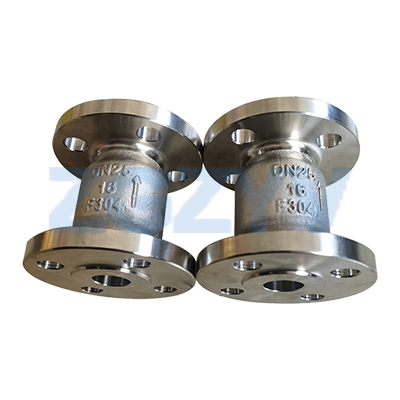
Key measures to prevent rusting of forged steel valves
Rust on forged steel valves can cause the valve to fail to open or seal, so precautions should be taken.
There are three major measures to prevent rust:
Daily protection:
For idle valves, the inlet and outlet valves should be closed, the internal medium should be cleaned, the valve stem should be coated with lubricating grease, the external cover should be covered with a dust cover, and stored in a dry and ventilated place (avoiding damp, acidic and alkaline environments); When using valves, the valve stem seal should be checked weekly for leaks, and lubricating grease should be added to the valve stem regularly (monthly). If there is any residual medium on the flange sealing surface, it should be wiped with clean water or neutral solvent in a timely manner.
Working condition adaptation:
If the medium contains corrosive components (such as acid, alkali, salt water), corrosion-resistant forged steel materials (such as 316L forged steel valves) should be selected, or anti-corrosion coatings (such as PTFE coatings) should be applied inside the valve to avoid direct contact between the substrate and the corrosive medium.
Avoid improper operation:
Avoid sudden opening and closing of valves to prevent damage to the valve core/stem and damage to the protective layer; Long term closed valves should be slightly opened 1-2 times a month to prevent the valve stem from sticking to the packing and reduce moisture retention.
If the forged steel valve has encountered problems such as inability to open or seal failure (such as continuous leakage), it is necessary to shut down and disassemble for inspection. If necessary, replace the valve core, seal or integral valve to avoid affecting the system operation.