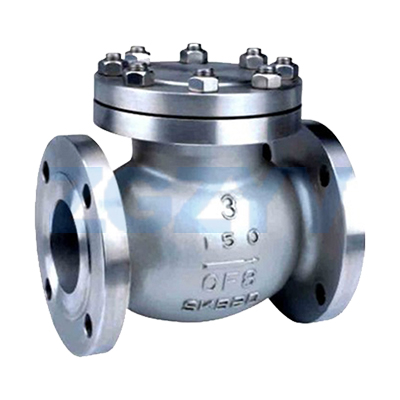
What are the consequences of operating a cast steel check valve at excessive pressure?
If a cast steel check valve operates under excessive pressure, the immediate consequences include seal failure, component damage, and even the risk of safety incidents!
Valve leakage or medium leakage: Overpressure can push open the sealing surfaces between the valve core and seat, potentially compressing or damaging the seals. Even after the pressure is reduced, the valve may no longer seal tightly, leading to reverse medium leakage, such as continuous dripping from a water pipe or material leakage from a chemical pipeline.
The valve core and seat are damaged: excessive pressure can cause the medium flow velocity to suddenly increase, leading to high-speed erosion of the metal surfaces of the valve core and seat, creating pits or even directly breaking the valve core. The valve completely loses its check function, allowing the medium to continuously flow in reverse.
Valve body cracking and pipe bursting: Although cast steel has a certain strength, when the pressure exceeds the limit that the valve body can withstand, weak areas (such as valve body joints and thinner sections) may crack. In severe cases, the valve body may suddenly burst, causing the medium to spray out and leading to safety hazards (such as burns, raw material leakage, and contamination).
Secondary damage to pipelines/equipment: The leaked medium under excessive pressure may impact downstream pipelines or connected equipment. For instance, water flow impact can cause pipeline vibration, joint loosening, and even lead to malfunctions in downstream equipment such as pumps and heat exchangers due to unstable pressure.