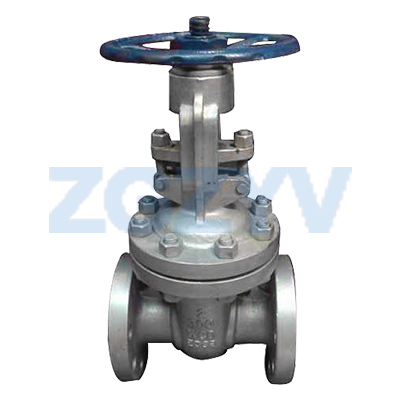
Explain why the sealing of the cast steel gate valve is not good?
The poor sealing of cast steel gate valves requires a detailed disassembly from four dimensions: manufacturing defects, component wear, improper installation, and impact on working conditions, based on their sealing structure (valve core and seat sealing surface, valve stem packing box, flange connection) and usage scenarios. Specific explanations can be provided in a coherent manner as follows:
The main reason for the failure of the sealing surface between the valve core and valve seat is:
This is the most critical sealing part of gate valves. If there are inherent problems during manufacturing, such as residual sand holes, air holes, shrinkage and other defects on the sealing surface during casting, or insufficient machining accuracy (such as flatness deviation of the sealing surface, insufficient concentricity between the valve core and valve seat), it will cause the two to not fully fit, and there will be sealing hazards at the factory; In use, if the medium contains solid particles (such as sediment and metal debris), the particles will get stuck between the sealing surfaces when opening and closing the valve, repeatedly rubbing and scratching the surface, forming grooves or pits, and damaging the sealing fit; Long term transportation of corrosive media (such as acidic and alkaline solutions) will gradually erode the cast steel material of the sealing surface, resulting in rust spots, peeling, and even corrosion pits on the surface; If used under high temperature and high pressure conditions for a long time, the sealing surface will deform due to thermal stress (such as local protrusions or depressions), causing gaps in the originally tight fitting surface and leading to leakage.
The sealing failure of the valve stem packing box is a common vulnerability:
The packing box between the valve stem and the valve body relies on the elastic compression of the packing to achieve sealing. If there are problems with the packing itself, such as aging, hardening (loss of elasticity) after long-term use, or incorrect selection (such as using ordinary asbestos packing that is not heat-resistant for high temperature conditions and brittle packing for low temperature conditions), it will result in a loose fit between the packing and the valve stem or the inner wall of the packing box; If the packing is not properly pressed during installation, such as insufficient packing rings, misaligned packing interfaces (forming straight through gaps), or the packing gland is tightened too loosely (insufficient sealing force) or too tightly (causing valve stem wear and actually damaging the seal), it will also allow the medium to leak from the valve stem; In addition, if the valve stem moves back and forth for a long time and the surface is corroded by the medium or scratched by impurities, grooves will form, and the packing cannot completely wrap around the surface of the valve stem, which will also cause sealing failure.
Improper sealing of flange connections can easily cause end face leakage:
The gate valve is connected to the pipeline through a flange and relies on flange gaskets to achieve sealing. If the gasket selection is incorrect (such as using ordinary rubber gaskets when the medium is strongly corrosive and low melting point gaskets when high temperature is used), or if the gasket itself is aged, damaged, or cracked, it cannot fill the small gaps on the flange sealing surface; If there is damage to the flange sealing surface during installation (such as scratches or deformation caused by transportation or installation), or if the gasket is not placed correctly (misaligned or offset), resulting in some areas not being covered by the gasket; Uneven tightening of flange bolts (some bolts are too loose, some are too tight) can cause uneven stress on the flange sealing surface, resulting in local gaps and medium leakage from the weak stress gaps.
Improper use and maintenance can accelerate seal failure:
For example, if the valve is opened or closed too forcefully, the instantaneous impact force can cause the valve core to collide with the sealing surface of the valve seat and deform, or the valve stem to be skewed under force; Long term operation beyond the rated pressure and temperature of the valve can cause the sealing structure to bear loads beyond its design, accelerating the wear of the sealing surface and aging of the packing; In daily maintenance, if impurities on the sealing surface are not regularly cleaned, or aging fillers and gaskets are not replaced in a timely manner, the originally minor sealing problems will gradually expand, ultimately leading to obvious leaks.